

GST authorities have collected ₹142 crores in e-way bill penalties last quarter alone. Learn how to avoid the 7 most common violations with real-world examples and practical solutions that can save your transport business lakhs in unnecessary fines.
7 E-Way Bill Penalties You Can Easily Avoid in 2026
With GST authorities ramping up enforcement across India, e-way bill violations have become a major source of revenue leakage for transporters. In the last quarter alone, over ₹142 crores in penalties were issued nationwide – much of which could have been avoided with proper systems in place.
As someone who has personally helped dozens of transport companies optimize their compliance processes, I've seen firsthand how simple oversights can lead to massive penalties. Here are the 7 most common and costly e-way bill mistakes that every transporter should know how to avoid.
1. Expired E-Way Bills During Transit (₹10,000 minimum penalty)
Perhaps the most common violation is simply letting an e-way bill expire while goods are still in transit. With the recent enforcement tightening, officers at checkpoints are now scanning almost every commercial vehicle.
Real Case:
A Jaipur-based transporter faced a ₹35,000 penalty when their driver was stopped just 30km from the destination with an e-way bill that had expired 2 hours earlier. The driver had been delayed at a rest stop, but the company had no system to alert them of the approaching expiration.
How to avoid it:
- Set up automated expiration alerts 6 hours before deadline
- Create a standard extension procedure for drivers to follow
- Use GPS tracking to identify at-risk shipments based on current location
2. Route Deviations Without Updates (₹15,000+ penalty)
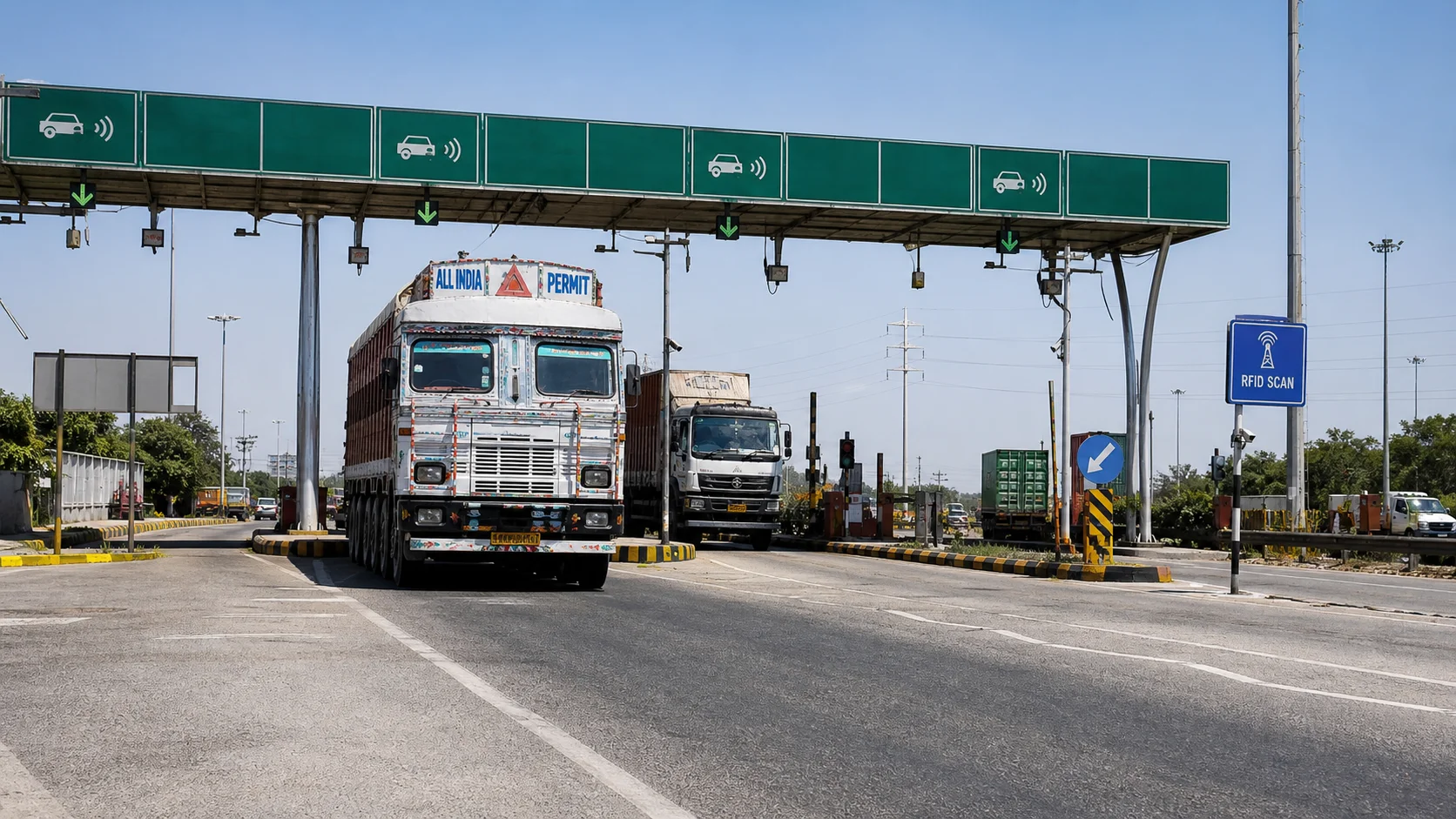
The new e-way bill monitoring system can now flag vehicles that substantially deviate from their declared routes, especially on major highways equipped with RFID readers.
Real Case:
A Mumbai-based FMCG distributor was penalized ₹22,500 when their vehicle took an alternate route due to highway construction without updating the e-way bill. Though they had a valid reason, the failure to update the route triggered automatic flagging.
How to avoid it:
- Train drivers to report any route changes immediately
- Implement a mobile-friendly system for quick route updates
- Update e-way bills when diverting vehicles, even for legitimate reasons like traffic or roadblocks
3. Mismatched Vehicle Numbers (₹20,000+ penalty)
Vehicle substitutions happen regularly in logistics operations, but failing to update the e-way bill with the new vehicle number is now one of the most strictly enforced violations.
Real Case:
A Pune-based logistics provider faced a crippling ₹47,000 penalty when they replaced a broken-down vehicle but only updated their internal systems – not the e-way bill. The replacement vehicle was stopped at a routine check, and despite carrying the same goods with valid documentation, the vehicle number mismatch triggered the maximum penalty.
How to avoid it:
- Create a mandatory vehicle reassignment checklist that includes e-way bill updates
- Implement a digital approval process that prevents dispatch until all documents are aligned
- Give dispatchers mobile access to update vehicle details from anywhere
4. HSN Code Misclassifications (₹10,000-25,000 penalty)
With the revised penalty structure implemented in January 2025, HSN code errors now carry much steeper penalties than before – especially for higher-value shipments.
Real Case:
An electronics distributor in Bangalore received a shock when their regular shipment was flagged for HSN misclassification. Though they had been using the same code for years, recent HSN revisions had changed the classification. The result was a ₹18,500 penalty that could have been completely avoided.
How to avoid it:
- Perform quarterly HSN code reviews for your common product categories
- Subscribe to GST notification updates about HSN changes
- Implement validation checks in your TMS system to flag outdated codes
5. Weight and Value Discrepancies (₹15,000 minimum penalty)
Modern checkpoints are increasingly equipped with weigh-in-motion technology that automatically flags vehicles whose actual weight doesn't match their e-way bill declarations.
Real Case:
A chemical transporter from Gujarat declared 16.5 tons on their e-way bill, but their vehicle weighed in at 18.2 tons at a checkpoint. Despite the driver's explanation about fuel weight, they faced a ₹23,000 penalty for the discrepancy.
How to avoid it:
- Always account for fuel, driver belongings, and equipment in weight declarations
- Implement proper weighing procedures before dispatch
- Add a small buffer (1-2%) to declared weights to accommodate variations
6. Multiple E-Way Bills for Single Consignment (₹10,000 penalty)
A less obvious but increasingly common violation is generating separate e-way bills for what tax authorities consider a single consignment – often done to stay under value thresholds.
Real Case:
A Delhi-based distributor shipping multiple product categories to the same customer created separate e-way bills for each category. Tax officers determined this was artificial splitting of a single consignment and imposed penalties of ₹10,000 per incorrect e-way bill.
How to avoid it:
- Create clear guidelines for what constitutes a single consignment
- Review your dispatching procedures to consolidate shipments properly
- Maintain proper documentation justifying separate bills when legitimate
7. Missing Part B Updates (₹5,000-10,000 penalty)
With the nationwide implementation of the "Part B Update Enforcement System" in December 2025, failing to update Part B (vehicle details) of an e-way bill before crossing the first checkpoint has become a strictly enforced violation.
Real Case:
A Chennai-based food products company generated e-way bills with only Part A (consignment details) completed, intending to update Part B once vehicles were assigned. In a busy period, three shipments left the warehouse before Part B was updated – resulting in penalties at the very first check post.
How to avoid it:
- Implement a "no movement without complete documentation" policy
- Create a dispatch checklist that includes Part B verification
- Use automated validation before gate passes are issued
How Technology Is Making Compliance Easier
While the penalty landscape looks intimidating, modern transport management systems have made compliance dramatically easier. Companies using integrated TMS solutions report up to 98% reduction in e-way bill-related penalties through:
- Automated validations that catch errors before submission
- Real-time monitoring of active e-way bills with expiration alerts
- Mobile updates allowing drivers to trigger extension requests
- Integration with GPS to identify potential route deviation issues
- Digital approval workflows ensuring all changes are properly documented
The Bottom Line
E-way bill penalties are no longer a cost of doing business – they're entirely avoidable expenses that directly impact your bottom line. The companies that thrive in today's strict enforcement environment are those that treat compliance as a critical operational process rather than an administrative afterthought.
By implementing the right systems and procedures, you can redirect the money currently going toward penalties into growing your business and improving your services instead.

Priya Sharma
Compliance Specialist at FreightSynQ
With over 12 years in GST compliance and logistics, Priya specializes in helping transport companies navigate complex regulatory requirements.
Eliminate E-Way Bill Penalties from Your Operations
FreightSynQ's TMS automatically validates e-way bills and prevents violations before they happen.
Get Compliance Audit →Related Articles


Tags
Share this article
FreightSynQ TMS
Manage your fleet, billing & LRs — all in one place
- Digital LR in 30 seconds
- FASTag live tracking
- GST-ready invoicing
- Fleet & driver control
Related Articles

Delhi-NCR Truck Restrictions 2026: What Transporters Must Check
Delhi’s revised GRAP curbs and the 31 October end of the BS-IV transition create two separate dispatch checks for goods vehicles. Here is how transporters can plan routes, verify vehicle status and reduce last-minute disruption.

Electric Truck Corridors in India: A 2026 Guide for Transporters
India’s electric freight market is moving from individual pilots toward corridor-based planning. Here is what the 2026 shift means for Indian transporters, and how to assess a route before committing trucks or capital.

How to Reduce Billing Errors in Your Transport Business
Transport billing errors often start with a missing trip detail, a rate mismatch or paperwork that never reaches accounts. Use these practical checks to invoice accurately and collect with less rework.
Ready to Transform Your Transport Business?
Start your journey with FreightSynQ today and implement the strategies you've read about
No credit card required • 7-day free trial